
Discover Italy
The Most Famous Landmarks in Italy
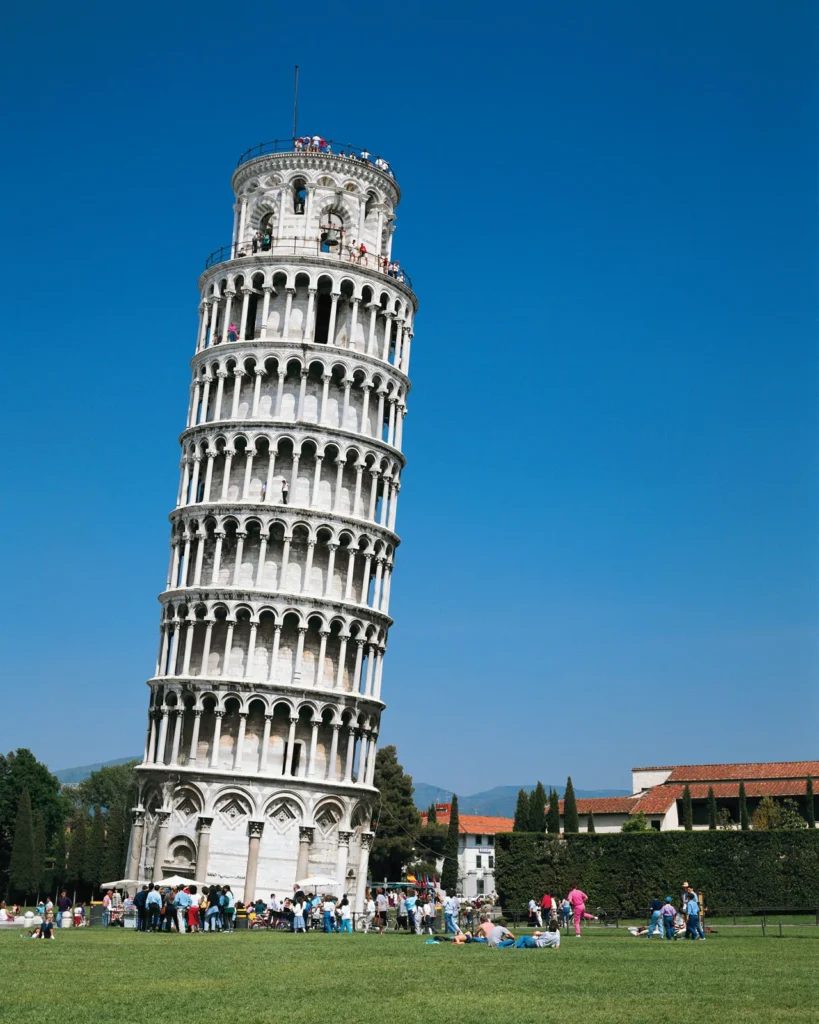
The Leaning Tower of Pisa
The Leaning Tower of Pisa is one of the most recognisable buildings in the world.
But here’s the big question:
Why does it lean?
When builders started constructing it in 1173, they didn’t realise the ground underneath was too soft. The soil was a mix of sand and clay, which isn’t very stable. As the tower got taller, one side began to sink slightly into the ground.
Instead of knocking it down, they kept building — and tried to correct the tilt over time. That’s why the tower actually curves slightly as it rises.
One interesting fact:
The tower is about 56 metres tall and leans at roughly 4 degrees today. Engineers have worked for years to stop it from falling over completely, and it is now considered stable.
So yes — it leans because of soft ground. Not bad design. Just medieval soil science.
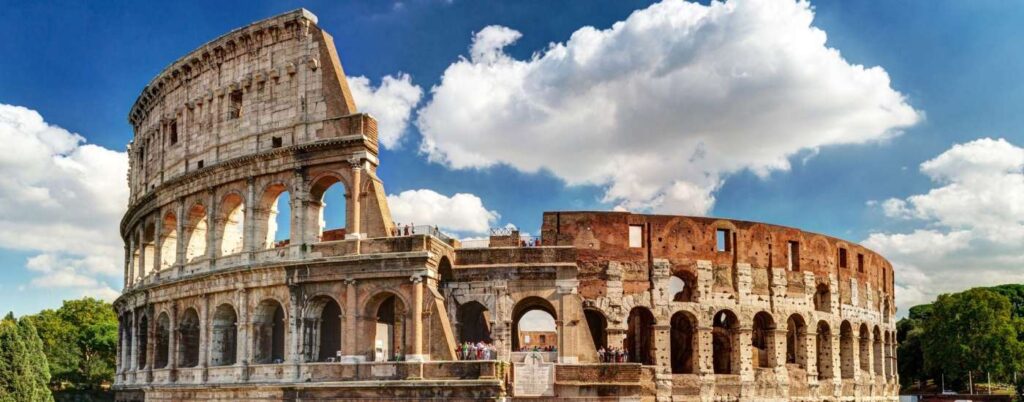
The Colosseum
The Colosseum is an enormous ancient amphitheatre in Rome. It was completed in 80 AD by the Roman Empire.
Fact 1:
It could hold between 50,000 and 80,000 spectators. That’s similar to a modern football stadium — except it was built nearly 2,000 years ago without modern machinery.
Fact 2:
The arena floor once had trapdoors and underground tunnels (called the hypogeum). Gladiators and even wild animals would be lifted up into the arena using ancient mechanical systems. Imagine the crowd waiting… and suddenly a lion appears from beneath the floor.
The Romans did not do small-scale entertainment.
Did You Know??????
1. The Leaning Tower of Pisa was once in danger of collapsing.
By the 1990s, the tilt had become so severe that experts feared it might fall. Engineers closed it to the public for 11 years while they carefully removed soil from underneath to reduce the lean and stabilise it.
2. The Colosseum was damaged by earthquakes, not just time.
Several strong earthquakes in the Middle Ages caused large sections of the outer walls to collapse. Some of the fallen stone was later reused to build other buildings in Rome.
3. The Colosseum had a giant retractable roof.
A massive awning system called the velarium could be stretched over the top to provide shade for spectators. Roman sailors were trained to operate it using ropes and pulleys.